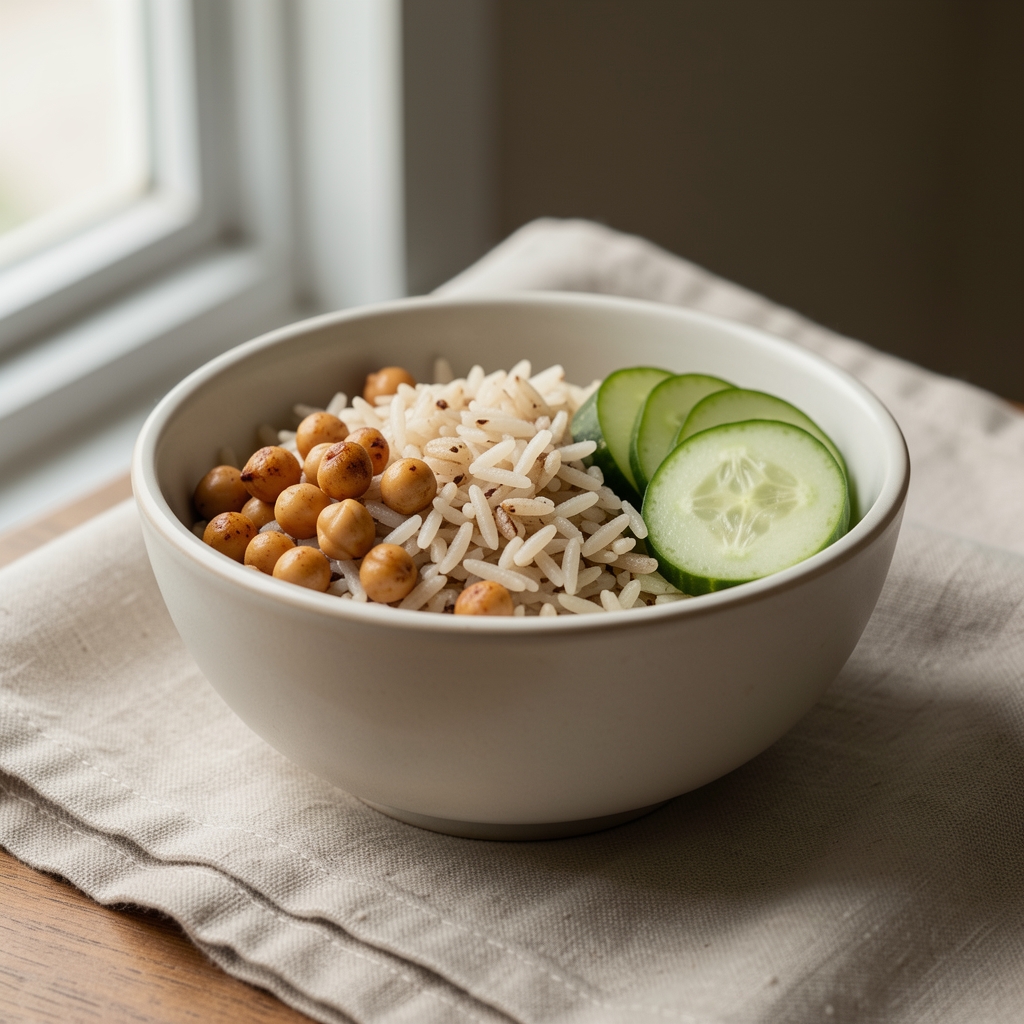
There is a particular quality to the afternoon that follows a carbohydrate-heavy lunch — a softening of attention that arrives quietly, around two o'clock, and settles itself into the working day like an uninvited guest. This essay examines what published nutritional observation says about that pattern, and why the midday carbohydrate deserves more careful consideration than it typically receives.
The Carbohydrate at Noon
The midday meal, for much of the contemporary working population, is constructed around carbohydrate. The office sandwich, the pasta salad, the rice bowl from the canteen — these are the practical centre of the working lunch, selected for convenience, familiarity, and the reasonable expectation of satiety. What is rarely considered, in the moment of selection, is what follows: the hours between the cleared plate and the close of the working day.
Carbohydrates are not, in themselves, a cause for concern. They are the body's primary and preferred source of energy, and the published nutritional literature is consistent on this point. The more nuanced observation concerns the type of carbohydrate and its proportion within the overall meal — and, specifically, the post-meal energy pattern that different carbohydrate compositions tend to produce.
A meal built primarily around refined carbohydrates — white bread, white rice, processed cereals — tends to produce a rapid rise in blood glucose followed, some time later, by a corresponding dip. That dip is not dramatic in most people, but its effects on concentration and alertness have been documented across a range of published dietary studies. It is the mechanism behind what is commonly, if loosely, referred to as the post-lunch energy dip.

The Afternoon Pattern
The afternoon pattern that follows a carbohydrate-rich lunch is one that many working people recognise without needing to be told its name. The familiar experience of difficulty concentrating on a complex task between one and three in the afternoon — the tendency to reach for coffee, to allow emails to accumulate unanswered, to defer decisions to a later hour — may be partly connected to the composition of the midday meal.
It is important to note that the afternoon energy pattern is not entirely attributable to food. Circadian rhythms produce a mild natural dip in alertness in the early afternoon regardless of what was eaten. Light levels, hydration, the nature of the work itself, and accumulated sleep all contribute to the quality of afternoon attention. The meal is one variable among several — but it is a particularly tractable one, in that it can be adjusted without requiring any equipment, any specialist input, or any significant change to the structure of the working day.
“The meal is one variable among several — but it is a particularly tractable one.”
What the Research Notes
Published nutritional research on post-meal alertness is a nuanced body of work. A number of studies have examined the relationship between the glycaemic index of foods consumed at midday and subsequent performance on cognitive tasks. The general tendency in the literature is consistent with the pattern described above: meals with a higher proportion of refined carbohydrates are associated, across a range of study populations, with reduced performance on tasks requiring sustained attention in the afternoon compared with meals of equivalent caloric value built around a different nutritional composition.
The effect is not uniform. Individual variation is significant. Some people report no perceptible difference in afternoon alertness across a range of midday meal compositions. Others notice it reliably. The variation appears to be influenced by baseline metabolic factors, by physical activity levels, and by the volume of food consumed — not by the carbohydrate content alone. A modest portion of pasta, eaten slowly and with a significant proportion of vegetables and protein, behaves differently in the body than a large plate of white rice consumed in fifteen minutes.
This last observation — the interaction between carbohydrate content, meal size, protein proportion, and eating pace — is the terrain that this notebook is most interested in. It is not the simple identification of carbohydrates as a problem. It is the more careful observation of how these variables interact with each other and with the demands of afternoon work.
Composition and Proportion
The research literature consistently points to certain nutritional compositions as associated with a more measured post-meal energy pattern. Meals where whole grains take the place of refined carbohydrates, where a meaningful proportion of the plate is occupied by vegetables and legumes, and where protein forms a substantive part of the meal — these compositions are associated with a more attentive afternoon in the available published evidence.
The key variables, from a compositional perspective, appear to be the fibre content of the carbohydrates in the meal (which affects the speed at which glucose enters the bloodstream) and the protein proportion (which has its own, distinct effect on post-meal energy rhythm and satiety). A meal that combines a modest portion of whole grain with a significant protein component and a generous vegetable base behaves differently from a meal in which refined carbohydrate dominates.
What is notable is that the transition from one type of midday composition to the other does not necessarily require a complete rethinking of the working lunch. The practical change — choosing wholegrain bread over white, adding a portion of legumes to a salad, building a rice dish from brown rather than white rice — is relatively modest, and the accumulated effect over a working week is worth considering.
-
01
Refined carbohydrates at midday are associated with a more pronounced post-meal energy dip in the afternoon, particularly when consumed in large portions.
-
02
Whole grain alternatives — brown rice, wholegrain bread, oats — support a more measured post-meal energy pattern in the published evidence.
-
03
Meal size interacts significantly with carbohydrate type — a large portion of any carbohydrate tends to produce a more pronounced post-meal pattern than a modest one.
-
04
Individual variation is considerable — the pattern described here is a general tendency observed across populations, not a universal response.
Field Observations
Over the course of several months spent observing and recording midday meals and their afternoon aftereffects, certain patterns emerged that the published literature broadly supports. Days on which lunch was a large, refined-carbohydrate-centred meal — a plate of white pasta, a sizeable sandwich on white bread, a portion of fried rice — were associated, with notable consistency, with a heavier, less attentive early afternoon. Days on which lunch was a smaller, more compositionally varied meal — a bowl of lentils and brown rice, a salad with chickpeas and a tahini dressing — tended to produce a different quality of afternoon.
These are field observations, not a study. They are confounded by all the variables that confound any uncontrolled personal record: sleep, activity, stress, hydration, the nature of the afternoon's work. But they are consistent with what the available evidence suggests, and they provided the animating impetus for this notebook's first essay.
The question this essay leaves open — and which the notebook intends to continue examining — is not which lunch is best, but how the midday meal can be approached with more deliberate attention to what follows. The afternoon is not a given. Its quality is, in part, constructed in the choices made around noon.
Articles published on Katon Notebook are editorial in nature and reflect the writers' observations on everyday food choices and their relationship to afternoon energy and focus. The content is not intended as professional advice, nor as guidance for the management of any specific condition. Readers with specific concerns about their daily routines are encouraged to speak with a qualified wellness professional.